You don't need a free Saturday, a label maker, or a sudden surge of motivation to keep your home from drifting into chaos. You need twenty minutes, a timer, and a short routine you can repeat without thinking about it. The 20-Minute Tidy-Up is a daily reset: one loop through the rooms you actually live in, returning things to their homes before the day ends. It isn't deep cleaning, and it isn't decluttering. It's the small, unglamorous habit that stops clutter from piling up in the first place.
Tidying and cleaning get used interchangeably, but they're different jobs. Cleaning means scrubbing the stovetop, wiping baseboards, vacuuming under the couch. Tidying means putting the mail in the mail tray, the shoes on the rack, the mug in the dishwasher. A 20-minute tidy-up is almost entirely the second kind of work.
That distinction matters, because most people who feel behind on housework are not behind on cleaning. They're behind on returning things to where they belong. Once the surfaces are clear, the room reads as clean even if the floor hasn't been mopped in nine days.
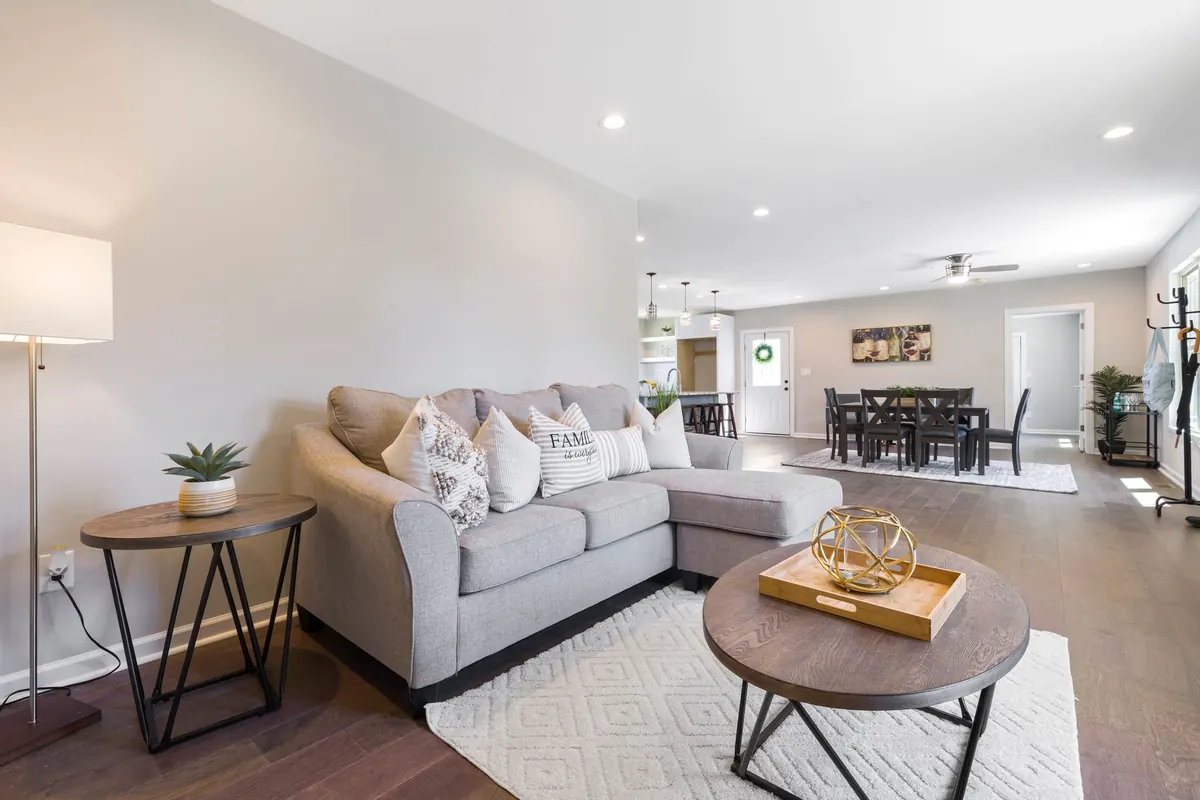
Keep the scope tight. Work the main rooms only: kitchen, living room, entryway, dining table, and maybe the bathroom if it's on your path. Bedrooms, basements, and craft closets are not part of the daily loop. They get attention on a different schedule.
Marathon cleaning fails for a predictable reason: it's easy to postpone. There's always a better Saturday. And when you finally do it, you spend the first hour feeling overwhelmed and the last hour resenting everyone who contributed to the mess.
Twenty minutes a day is a little over two hours a week, spread across seven short sessions. You'll never dread it the way you dread a three-hour project, because there's nothing to dread. The timer starts, you work, the timer ends, and you're done whether or not everything is finished.
There's a second benefit that's harder to measure but easy to feel. When the counters are clear at 8 p.m., tomorrow morning starts calmly. You find your keys. You make coffee without moving a stack of papers. Small routines compound into a home that mostly runs itself.
Gather three things and you're ready:
The basket does the heavy lifting. Anything that belongs in another room goes in the basket instead of being carried back and forth. You make that trip once, at the end, with everything in your hands.
One rule keeps the basket from becoming a permanent fixture: if something can be put away in under a minute, do it now. If it can't, it goes in the basket.
Order matters more than speed. Work in the same sequence every night and the routine becomes automatic, which is the whole point.
If the timer goes off mid-task, stop. Stopping on time is what makes tomorrow possible.
Some nights the day wins. Do a short version instead of skipping entirely: clear the kitchen sink, clear one flat surface, and clear a walking path through the room. That's it. Three moves that make the space functional again.
A ten-minute reset is not a failure. It's the difference between starting tomorrow at zero and starting it twenty minutes in the hole.
Most people who quit this routine quit for one of these reasons.
Attach the routine to something you already do every day. After you finish dinner and wipe the table, the timer starts. When the kids go down, you do one loop. The existing habit becomes the cue, and you stop relying on willpower.
Keep the order identical each night, and keep the timer visible so you can see the time leaving rather than guessing at it. If you miss a night, don't try to make it up with a double session. Use the two-day rule: never skip twice in a row. A missed Tuesday followed by a normal Wednesday is fine. A missed Tuesday, Wednesday, and Thursday is how routines die.
Once a week, take ten minutes to empty the donate box and check whether anything in the basket has been sitting there since Monday. If it has, it probably doesn't have a real home yet — give it one or let it go.
Expect the first week to feel slow and slightly awkward. You'll move things you don't remember setting down, and you'll find three items with no logical place to live. That's normal, and it's information: your home needs a spot for keys, or mail, or the water bottle collection. Build those spots one at a time, in response to what actually accumulates.
Twenty minutes, the same loop, most nights. That's the entire method, and it's enough to keep the rooms you live in ready for company, for a quiet evening, or for whatever tomorrow brings.
Photo: Curtis Adams / Pexels